
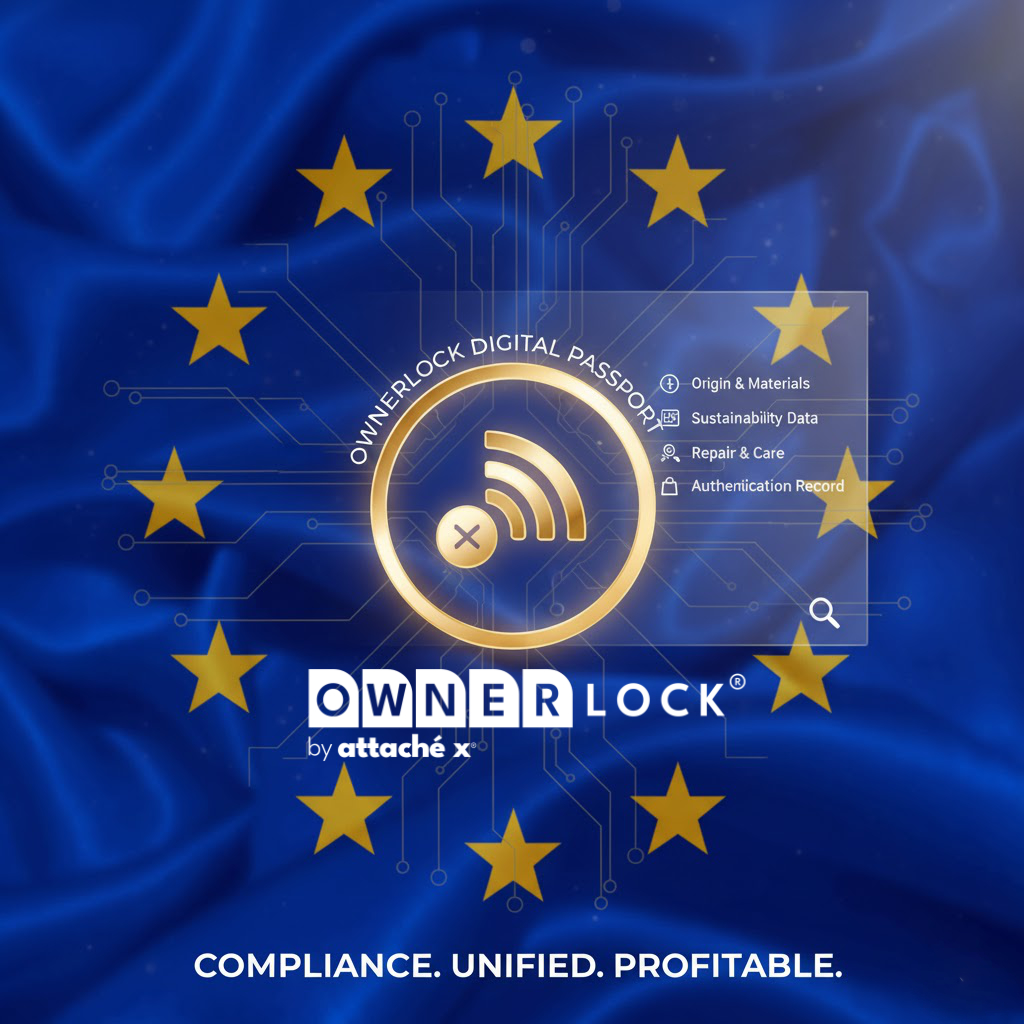
The Digital Product Passport: Transforming Compliance from a Cost into a Digital Signature
Discover how the EU’s Digital Product Passport (DPP) mandate is a global compliance deadline for leather and textile businesses. Learn how OwnerLock® transforms this cost centre into a profit-driving, all-in-one solution for traceability, authentication, and direct customer sales across Europe and the US.
The shift towards mandatory digital product traceability is a global commercial imperative, spearheaded by the European Union but echoed across international markets, including pioneering work in the United States.
The European Union’s pivotal Digital Product Passport (DPP) regulation establishes a digital record-keeping system that will act as a “digital twin” for physical products, meticulously storing data about its origin, materials, environmental impact, and comprehensive instructions on how to repair or recycle it.
This directive is part of the broader Ecodesign for Sustainable Products Regulation (ESPR), an ambitious endeavour aimed at making products placed on the EU market more durable, sustainable, and fundamentally circular. For brands of genuine substance, this is the moment to seize an intelligent, unified digital strategy, or risk having compliance become a crippling operational overhead.
The Global Imperative: Compliance Across Continents
While the EU’s DPP is the most comprehensive regulation currently, manufacturers must contend with a widening net of global scrutiny:
- North American Transparency: Key jurisdictions, such as California, have already enacted stringent supply chain transparency laws (e.g., the Transparency in Supply Chains Act) requiring manufacturers to publicly disclose their efforts to eradicate modern slavery and human trafficking. These regulations, focusing on ethical sourcing and provenance, demand the same granular, verifiable data that the DPP requires for sustainability claims.
- A Unified Digital Backbone: These converging global demands confirm that relying on paper trails is no longer tenable. Solutions like OwnerLock® provide the unified digital infrastructure to manage complex, multi-jurisdictional data requirements—ensuring both European environmental compliance and North American ethical transparency are met with a single, elegant platform.
Timeline for Implementation: The Path to Mandatory Compliance
For the accessories and leather goods market, the pace is brisk, demanding immediate action to avoid complex, expensive, and hurried compliance solutions later:
- July 2024: The ESPR regulation officially entered into force.
- 2025: The EU releases the “First Working Plan,” confirming priority products. Textiles (including leather accessories) are a top priority.
- Late 2026 – Early 2027: Specific rules (Delegated Acts) for textiles and footwear will be finalised. This clarifies precisely what data fields are required for an artisanal leather good.
- Mid-2027 to 2028: Compliance becomes mandatory. Most experts advise discerning accessories brands to aim for full readiness by 2027. The time to build your digital backbone is now.
- 2030: A ban on the destruction of unsold consumer goods (unsold stock) applies to medium-sized enterprises (small/micro businesses may be exempt or have a longer grace period).
This mandate applies to any product placed on the EU market, regardless of the company’s scale. If you engage with European clientele, compliance is non-negotiable.
Specific Impacts on Leather & Accessories
The regulation introduces several layers of rigorous technical scrutiny unique to premium leather goods:
- Traceability is King: For leather goods, you will likely need to prove the origin of the hide (to ensure it is not from deforested areas, complying with the separate EU Deforestation Regulation) and where it was tanned.
- Chemical Transparency: Disclosure of tanning methods (e.g., vegetable vs. chrome tanning) and chemical treatments is anticipated, as these processes are heavily scrutinised in leather production.
- Hardware Components: “Iron and steel” and “aluminium” are also priority categories. If your accessories feature significant metal hardware (buckles, chains, clasps), you may eventually need compliance data from those metal suppliers as well.
The “To-Do” List for SMBs: From Craft to Code
This pivot requires a shift in operational focus for every high-end maker:
- Map Your Supply Chain: You can no longer merely know your finished goods manufacturer. You must know their suppliers (tanneries, hardware factories) to capture the required data.
- Establish a Digital Product Passport (DPP) Architecture: This is the pivotal move from paper processes to intelligent elegance. The complex, multifaceted data must transition to a secure, structured digital platform. For brands seeking to master this mandate seamlessly, integrating an all-in-one digital product passport system, such as our OwnerLock® technology, is essential. Our NFC-powered system provides the secure, immutable foundation necessary to host this ‘digital twin’ data without technical hassle.
- Prepare for Repair and Longevity: The DPP will require you to provide clear information on how to repair and care for the item. For a leather companion, this means providing certified care instructions or listing authorised repair centres to demonstrably extend its life.
Strategic Opportunities: Transforming Compliance into a Profit Centre
Compliance should not be seen as an inescapable cost, but as a crucial business investment. OwnerLock® is the intelligent, unified solution designed to flip the DPP compliance burden into a source of perpetual revenue and competitive advantage.
- Flipping Cost to Profit with a No-Hassle Solution: While digital marketing costs surge, OwnerLock converts compliance expenditure into a high-ROI profit centre. It provides the all-in-one technical platform necessary for the mandated DPP data (traceability, materials, repair instructions) and simultaneously establishes a verified, privacy-compliant direct channel to the end-user—all for a predictable, transparent fee.
- Guaranteed Authentication via Digital Signature: A core pillar of the DPP’s value is verification. Systems like OwnerLock leverage a discreet, NFC-powered digital signature embedded within the product itself. This immediately and verifiably distinguishes your genuine leather masterpiece from low-quality counterfeits, elevating consumer trust in your brand’s integrity.
- Value Retention through Traceable Lifecycle: A verifiable digital history of “care and repair,” hosted by a robust system, significantly increases the potential resale value of luxury leather goods. This capability allows you to launch your own, fully verified “pre-loved” or circular resale programme, directly managing the narrative of your product’s lifecycle.
- Creating a Direct-to-Owner Sales Channel: OwnerLock establishes a seamless, perpetual communication link with the actual owner. This transforms the physical product into a permanently open sales channel, enabling targeted and highly efficient marketing of complementary products, exclusive pre-releases, and after-care services directly to the individual who values your craftsmanship most.
Want to discuss DPP compliance for your brand?